REVIEW · MYKONOS
Delos Tour from Mykonos
Book on Viator →Operated by Let's Book Travel · Bookable on Viator
Delos is a whole ancient world in one day. This Mykonos-to-Delos tour packs a guided walk across the main ruins and pairs it with a trip to the Delos museum where mosaics and statuary help make the place feel real. I also like that the tour includes boat transport plus wireless guided audio, so you’re less dependent on yelling over wind. One drawback to consider: the day can feel rushed, and weather or crowding can make timing and comfort harder.
I’m a big fan of tours that give you the right order of sights without turning into a long lecture. Here, you’ll move through the signature stops people come for—Agora, the Avenue of the Lions, and the famed houses—then finish with the museum pieces that clarify what you just saw in the sand and stone. Just plan for a lot of walking on uneven ground, and bring rain gear and water because Delos can feel exposed.
In This Review
- Key highlights worth knowing before you go
- Why Delos from Mykonos feels like an ancient fast-forward
- Price and value: what $129.77 covers and what might be extra
- Getting there from Mykonos Harbour: meeting point, timing, and return reality
- Delos ruins route: Agora, Avenue of the Lions, and the houses you’ll recognize
- Agora and the civic heart
- Avenue of the Lions: the photo stop with serious meaning
- Cleopatra’s House and House of Dionysus: where art explains life
- The smaller named houses: Dionysus, Trident, Masks, Dolphins
- Theatre and living quarters: the daily-life feeling
- Temple of Isis and the exposed feel of Delos
- The Delos museum: mosaics and statuary that make the ruins click
- Wireless audio, group size, and why pace can feel tight
- Weather, rain, and what to do if the day gets messy
- Who this Delos tour suits best
- Should you book the Mykonos to Delos tour?
- FAQ
- How long is the Delos tour from Mykonos?
- What does the price include?
- Do I need to pay extra for pickup?
- Where does the tour start and end?
- Is the tour offered in English?
- How many people are in a group?
Key highlights worth knowing before you go
- Boat ride to Delos built around the day’s schedule (about 45 minutes each way)
- Wireless guided tour system helps you hear your guide on the move
- Museum time included, where mosaics and statuary add context to the ruins
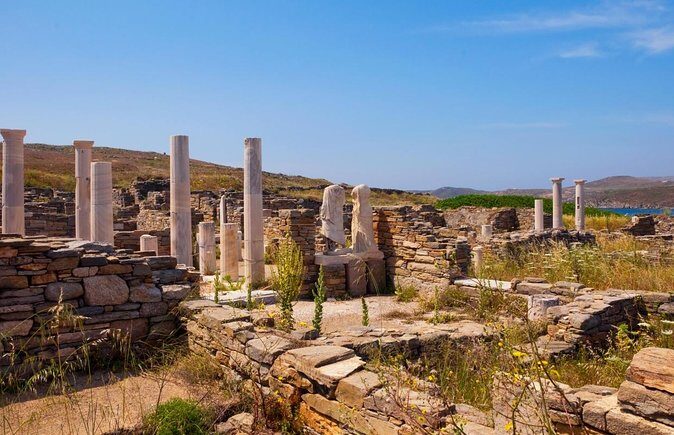
- Signature ruins stops such as Cleopatra’s House, the Avenue of the Lions, and the Temple of Isis
- Small-to-medium group size (up to 50), which matters on a crowded island
- English-speaking guide for a smoother experience from start to finish
Why Delos from Mykonos feels like an ancient fast-forward
Delos sits at the center of the Aegean, and that location mattered to the ancient world. People didn’t just stumble onto it; they sailed there because it was a key stopping point between major commercial centers. In myth and legend, the island is tied to Apollo and Artemis, and in real terms it grew into a sacred hub where cultures mixed over centuries.
When you visit, you’re not looking at one monument. You’re looking at an entire working city that became an archaeological map of daily life. The big stops you’ll hit are connected: the market and civic areas (like the Agora), the religious sites, and the houses and public spaces that show how people lived, shopped, drank, worshipped, and traveled.
If you’re the kind of traveler who likes to understand what you’re seeing, Delos is unusually good for that. Even in ruins, you can still connect patterns—where people gathered, how water was managed, and how art (especially mosaics) was part of normal life. It helps the island move from name on a postcard to something you can picture.
Other Delos and Rhenia cruises we've reviewed in Mykonos


Price and value: what $129.77 covers and what might be extra
At $129.77 per person for about 5 hours, this tour is built to be a practical highlights day. The included pieces that drive value are the boat tickets to Delos, a professional guide, and the wireless audio system (so you’re not stuck straining your ears while trying to walk).
The one financial detail you should treat as a must-check is the Delos entrance fee. The info provided lists an archaeological site entrance at €20.00 per person as not included. That may mean you pay on the spot (or after arrival), even if parts of the experience feel packaged. When the total price matters, I’d confirm at booking whether the entrance is included in your final amount or charged separately.
Hotel pickup is another variable. The tour offers pickup, but the info notes that hotel pickup is available for an extra charge. If you’re staying close to the port area, you may not need it. If you’re on the far side of Mykonos (or dragging luggage), paying for pickup can quietly save time and stress.
Getting there from Mykonos Harbour: meeting point, timing, and return reality
This starts at the Mykonos Harbour View area on an unnamed road (Mykonos 846 00). The tour ends back at the same meeting point. In other words, you’re not piecing together ferries or hunting down a taxi queue after your ruins day—you’re meant to get back by the operator’s schedule.
The schedule is built around a short boat hop. Delos is about a 45-minute ride from Mykonos, which is exactly why it works as a highlights tour instead of an all-day slog. On a day like this, that short sea time is the difference between seeing a lot and missing key sights.
Still, you should go in with flexible expectations about logistics. Some visitors reported delays and that pickup and drop-off coordination was less than smooth, especially when connections were time-sensitive (like cruise terminals). The fix is simple: arrive early to your meeting point, have your voucher or booking details ready, and keep your eyes on the group timing rather than assuming everything will run like a Swiss train.
Delos ruins route: Agora, Avenue of the Lions, and the houses you’ll recognize
On Delos, the order of stops matters because the island is spread out and the ground isn’t always friendly. Your route typically flows through the main archaeological areas in a way that turns scattered ruins into a story.
Agora and the civic heart
You’ll start in the archaeological zone where the Agora shows the ancient market and public life. Even when many structures are broken, the layout helps you understand how people moved through the day—where they met, traded, and gathered.



Avenue of the Lions: the photo stop with serious meaning
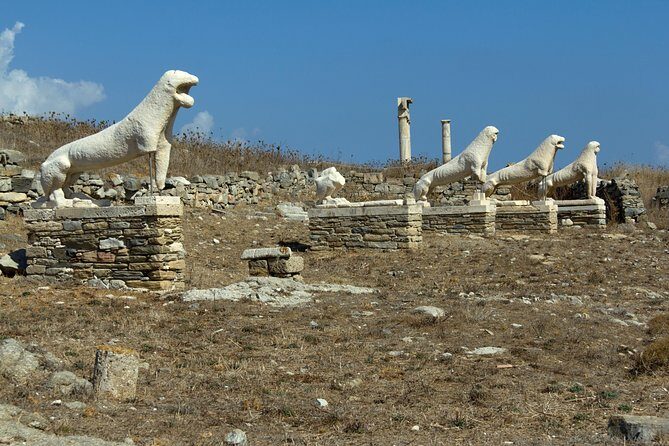
The Avenue of the Lions is famous for a reason. It’s not just a pretty stretch; it’s a signature landmark that connects religion, power, and the visual language of the ancient world. If you want a clear “I’m really here” moment, this is it.
The terrace linked to the Naxos lions is part of that same big-picture visual identity. Expect stone figures and strong lines that are easy to photograph, even if you have to work around crowds.
Cleopatra’s House and House of Dionysus: where art explains life
One of the best things Delos does is show you domestic space and decoration. You’ll visit Cleopatra’s House and the House of Dionysus, which helps turn the ruins from “columns and walls” into something closer to what daily life looked like.
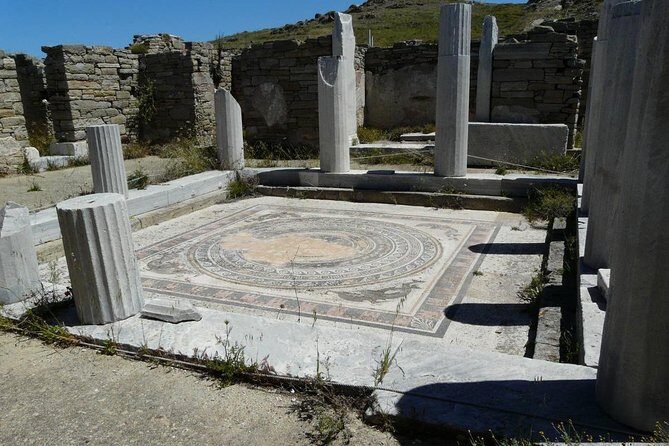
Look for the way these houses connect rooms, courtyards, and decorative elements. Reviews and site descriptions emphasize mosaics here, and that makes sense: Delos is known for art that used flooring and surfaces as living-room style statements. When the mosaics survive, the houses stop being abstract.
The smaller named houses: Dionysus, Trident, Masks, Dolphins
Your route also includes stops associated with key named areas like the Trident, the Masks, and the Dolphins with their mosaics. If you’ve ever wondered why people talk about mosaics like they matter, Delos gives a clear answer: they weren’t random decoration. They were a statement of taste, identity, and wealth.
You don’t need to memorize names to enjoy it, but it helps to know what you’re aiming for. When you see the floors and decorative remnants referenced by the tour, you’ll feel like the guide is pointing you toward the best preserved bits.
Theatre and living quarters: the daily-life feeling
You’ll also pass areas like the theatre and ancient living quarters, which add context. This is where Delos starts to feel less like a set of temples and more like a society. Even in fragments, you can sense performance, gathering, and community rhythm.
A big practical note: Delos isn’t shaded. If you’re doing this on a hot day, pace yourself and use each stop as an opportunity to rehydrate, not sprint to the next photo.
Temple of Isis and the exposed feel of Delos
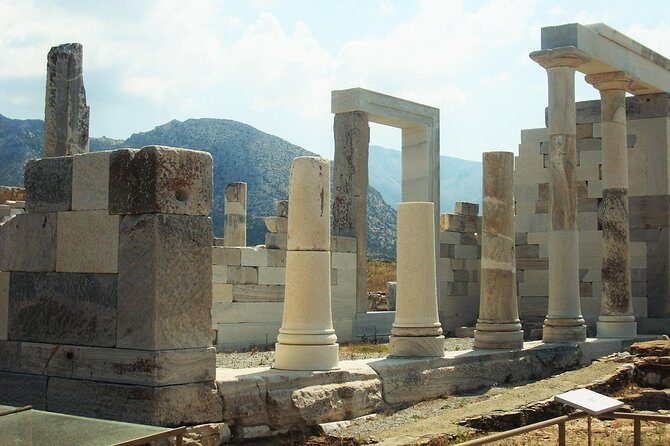
The Temple of Isis is one of the last big religious anchors you’ll look for. It’s a key stop because it reflects how Delos wasn’t only about one cultural layer; it shows shifting influences over time.
This area also connects neatly to the practical engineering side of Delos. The site includes things like Roman water systems and cisterns, which matter because they remind you the city had to function every day, not just for ceremonies. When you notice those features, Delos stops being only myth.
One comfort reality: the island is open and windy. If weather turns, it can turn fast. Some visitors described rain that started lightly and then became a downpour. You don’t want to be unprepared in that kind of exposure, especially when you’re walking between sites with limited places to duck in.
Bring a light rain layer or compact umbrella and keep your phone and camera protected. The good news is that the bones of the tour don’t change much: the guide can often keep you moving toward the main sights even when the sky isn’t cooperating.
The Delos museum: mosaics and statuary that make the ruins click
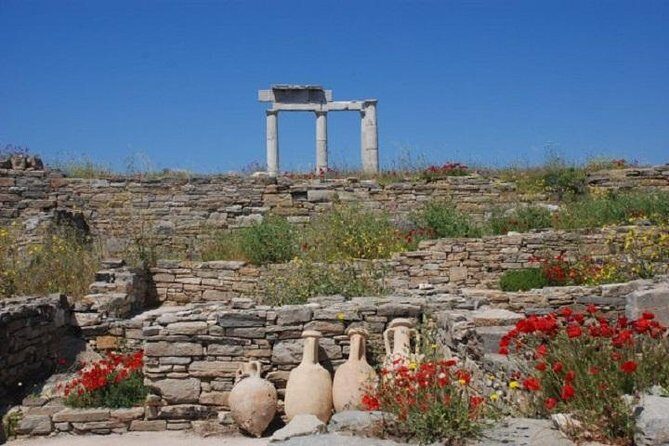
A major plus here is that the Delos museum is included. I like museum time on ruins tours because it fixes the biggest problem with archaeology: what you see outdoors is partial, broken, and weathered. Inside, you can often make more sense of what remains and why it mattered.
In the museum, you’re looking at mosaics and statuary, which helps you connect the decorative houses and floor art to the broader cultural picture. If you’ve ever walked through ruins and wondered what the objects looked like before they were damaged, this is the correction step.
Timing matters though. A few visitors felt they didn’t get enough museum time, and in at least one case the museum’s schedule didn’t cooperate with the tour day. I’d treat museum time as part of the priority plan, not something you’ll fit in “if you have extra minutes.” If you care about the mosaics, tell your guide you want to spend time on them.
Also remember that on hot days, museums offer real comfort. Even if your focus is outdoors, this stop gives your body a break without losing the story.
Wireless audio, group size, and why pace can feel tight
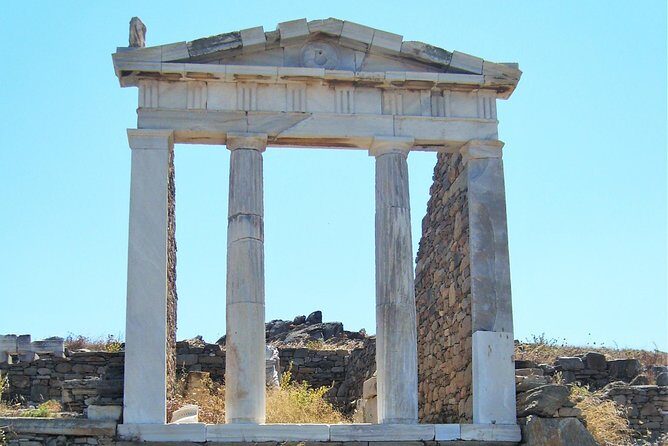
This tour includes a wireless guided tour system, which is a big deal. On exposed ruins with wind and crowds, it can be hard to hear. With wireless audio, you’re less dependent on shouting across distance.
That said, some people still reported hearing issues when groups were large and conditions were windy. The fix is simple: stay close enough to the guide that you’re not relying on your luck. If you’re in the back, you’ll feel it.
Restrooms are another real-world factor. At least one visitor mentioned there was only one bathroom and that it could take time away from the guided portion. That’s not something you can control, so plan like a pro: use the restroom early when you have the chance, and don’t wait until the group is already moving.
Finally, the day can feel compressed. Delos is extraordinary, but the tour is designed as a highlights pass in roughly 5 hours. If you want to linger—especially near the Temple of Isis or to do a deeper museum look—consider this tour as the “greatest hits” plan, then come back independently if you fall in love with the place.
Weather, rain, and what to do if the day gets messy
This experience is weather-dependent. If conditions aren’t right, the tour may be canceled or adjusted. That’s not a gimmick; the boat ride and walking sections both depend on safety and visibility.
When rain hit during one tour day, the main issue wasn’t just wet clothes. It affected the entire rhythm: return timing and the ability to grab lunch or reset expectations. The takeaway for you is straightforward: pack for the weather, and don’t schedule a tight connection right after you plan to return.
There’s also a reliability theme around coordination. Some experiences ran smoothly and others didn’t, particularly around communication and transfers. If you’re connecting from a cruise terminal or you’re on a tight schedule in Mykonos town, double-check the pickup point instructions ahead of time and keep your messaging polite but persistent if something doesn’t match what you were told.
Who this Delos tour suits best
This is a good match if you want:
- A guided highlights route through Delos without doing logistics yourself
- English interpretation and a way to hear the guide (wireless audio)
- A first-time Delos visit that hits the major named areas and then backs it up in the museum
It’s also a solid option for travelers who want a half-day plan from Mykonos that still feels substantial.
Where it’s not ideal:
- If you need lots of extra time at each site, this may feel rushed.
- If you’re sensitive to crowds, wind, and limited shade, you’ll want to plan your pace and bring comfort items.
- If mobility is limited, you should think carefully about the walking involved and how group movement will work.
If you’re the kind of person who can’t stop reading inscriptions and wants to trace every ruin, you may want a second visit later. For many people, this tour is the spark, not the finish.
Should you book the Mykonos to Delos tour?
I’d book if you want the efficient version of Delos: boat ride + guide + wireless audio + museum time, focused on the sights that most people remember. For the price, the boat transport and guided structure do real work for you, and the museum component is a smart add-on.
I wouldn’t book blindly if your travel day is fragile. Build in buffer time in Mykonos because weather can change the timing, and a few reported logistics hiccups can eat into your schedule.
My practical checklist:
- Confirm whether the €20 Delos entrance fee is included in what you’re paying or charged separately.
- Bring water and rain protection. Delos is exposed, and there’s limited shelter.
- If you care about the museum, treat it as a priority and follow your guide’s timing.
- If you’re booking hotel pickup, consider it if your hotel location makes meeting at the harbor annoying.
If you do all that, you’ll get a memorable day: sacred island myths, real-world ruins, and mosaics that make the ancient city feel human.
FAQ
How long is the Delos tour from Mykonos?
The tour runs about 5 hours (approximately).
What does the price include?
It includes boat tickets to Delos, a professional guide, and a wireless guided tour system. The Delos archaeological site entrance fee is listed as €20.00 per person (not included).
Do I need to pay extra for pickup?
Hotel pickup is available for an extra charge. Transfers to/from your hotel are listed as not included.
Where does the tour start and end?
The tour starts at Mykonos Harbour View (Unnamed Road, Μύκονος 846 00, Greece) and ends back at the same meeting point.
Is the tour offered in English?
Yes, it is offered in English.
How many people are in a group?
The tour has a maximum of 50 travelers.