REVIEW · MYKONOS
Mykonos Town: Archaeological Site of Delos Guided Day Trip
Book on GetYourGuide →Operated by Delos Travel · Bookable on GetYourGuide
Delos feels unreal even before you step off the boat. What makes this day trip special is a live guide walking you through an archaeological city that still reads like a story, not a pile of rocks. I especially liked the way guides such as Celia and Amaryllis bring scenes to life with clear, human explanations as you move from street to sanctuary.
You’ll also love the standout visuals: mosaics, marble columns, and wall paintings that look shockingly intact for something that’s roughly 2,000 years old. The second big win is the practical touring setup, including a wireless guide system so you can actually follow along while you’re walking.
The main thing to consider is the real-world logistics of a popular site: the tour can be a big group, and Delos is hot and sun-heavy with very limited facilities. If you hate crowds or need lots of shade breaks, you’ll want to plan carefully.
In This Review
- Key Points at a Glance
- Why Delos Feels Different Than Other Ruins
- Leaving Mykonos: Ferry Timing, Seats, and Motion
- Checking In at Deliana Port Without Losing Time
- Delos First Steps: Getting Your Bearings With a Guide
- The House of Dionysus: Mosaics, Wall Paintings, and Real Texture
- Walking Delos’s Main Street Toward the Market Ruins
- Temple of Apollo and the Sacred Zone: Where Myth Meets Layout
- Museum Time and the Four-Hour Reality Check
- Price and Value: What $93 Buys You (And What It Doesn’t)
- Group Size and Comfort: The Crowds Part of the Deal
- What to Bring to Actually Enjoy Delos
- Who This Tour Suits Best
- Should You Book the Mykonos Town: Delos Guided Day Trip?
- FAQ
- How long is the Delos guided day trip from Mykonos Town?
- Where do I check in for the tour in Mykonos?
- Is hotel pickup included?
- What’s included in the ticket price?
- Are there entrance fees for Delos?
- Is this tour suitable for wheelchair users?
Key Points at a Glance
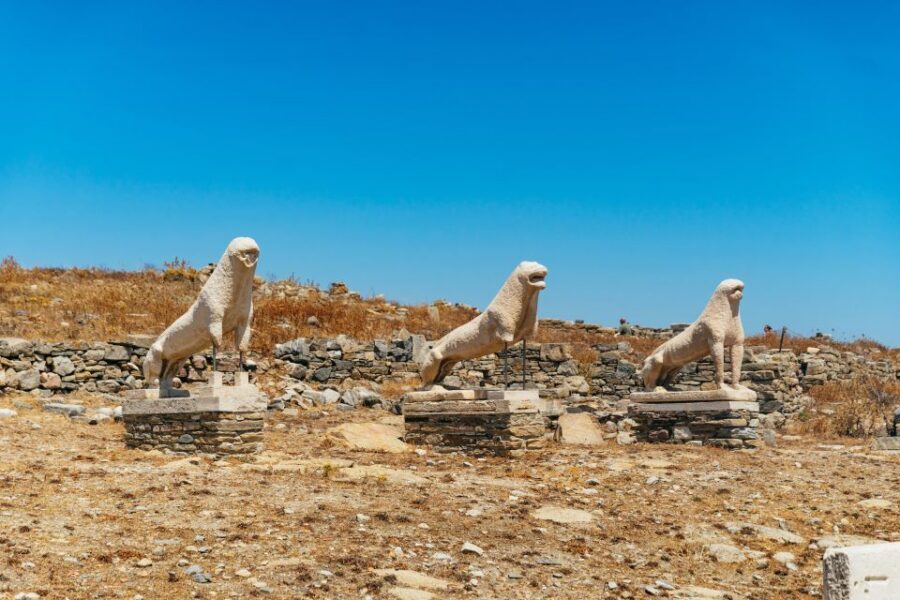
- Delos with a live guide: you’ll see more when someone explains what you’re looking at
- Mosaics and painted walls: rare “wow” moments in a largely outdoor site
- Apollo and market ruins: sacred space plus everyday streets in one loop
- Wireless audio system: helps you keep up on the move (and you should handle the device gently)
- Heat reality on Delos: bring sun protection and water, because shade is scarce
Why Delos Feels Different Than Other Ruins
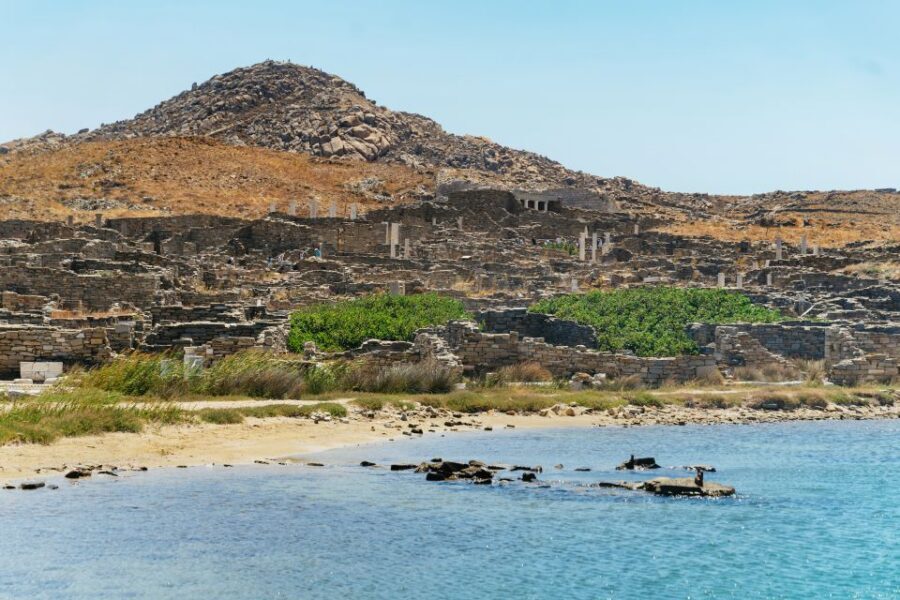
Delos doesn’t work like some ruins where you mostly wander and guess. Here, you’re moving through an ancient city that was planned, built, decorated, and used. With a guide, it clicks fast: you start recognizing zones—homes, sacred areas, theaters, and the commercial spine—so the place stops being confusing.
This is also one of those day trips where the travel time makes sense. You’re in Delos for a guided stretch long enough to absorb the core highlights, and then you get a bit of time on your own afterward. The whole schedule is built around being efficient without making you feel trapped.
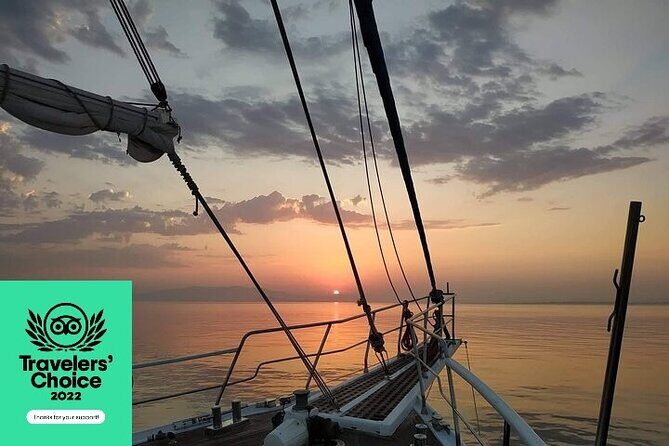
And yes, the ferry ride matters. Even if you’re not a “boat person,” the short crossing helps reset your brain for history mode. You leave Mykonos, get that Aegean air, and arrive ready to pay attention.
Other Delos and Rhenia cruises we've reviewed in Mykonos


Leaving Mykonos: Ferry Timing, Seats, and Motion
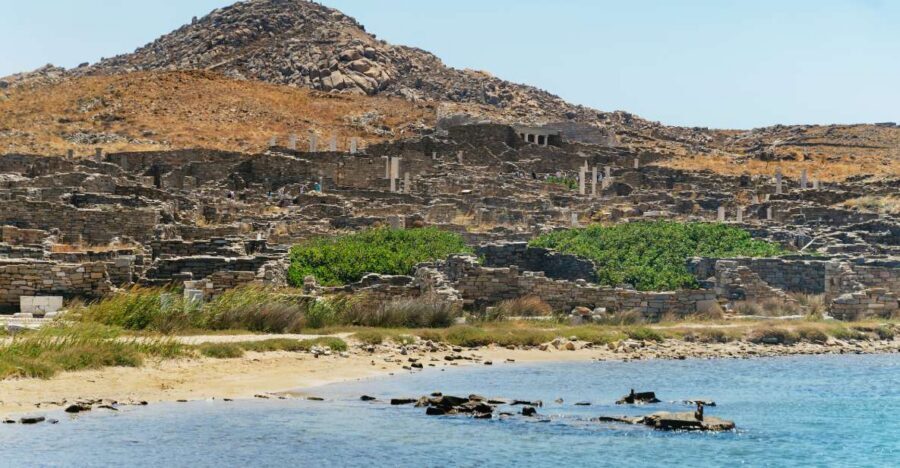
Most departures run from Deliana port in Mykonos Town, and the plan is a short ferry hop to Delos. The trip is roughly 30 minutes each way, so the day stays tight and keeps you from burning hours in transit.
A few practical notes that help:
- Bring patience for a busy morning. The ferry can get crowded, especially when cruise ships are in town.
- If you’re sensitive to motion, expect a bit of bounce on the water. It’s short, but it’s still a boat.
- Snacks and a toilet are available on board per multiple accounts, which is useful when you’re starting early.
If you choose the option with transfers, pickup time is typically 45 minutes to 1 hour before departure, and you’ll be told your exact pickup details by email. If you skip transfers, the tour departs from the old port instead. Either way, get yourself to the port early enough to check in calmly.
Checking In at Deliana Port Without Losing Time
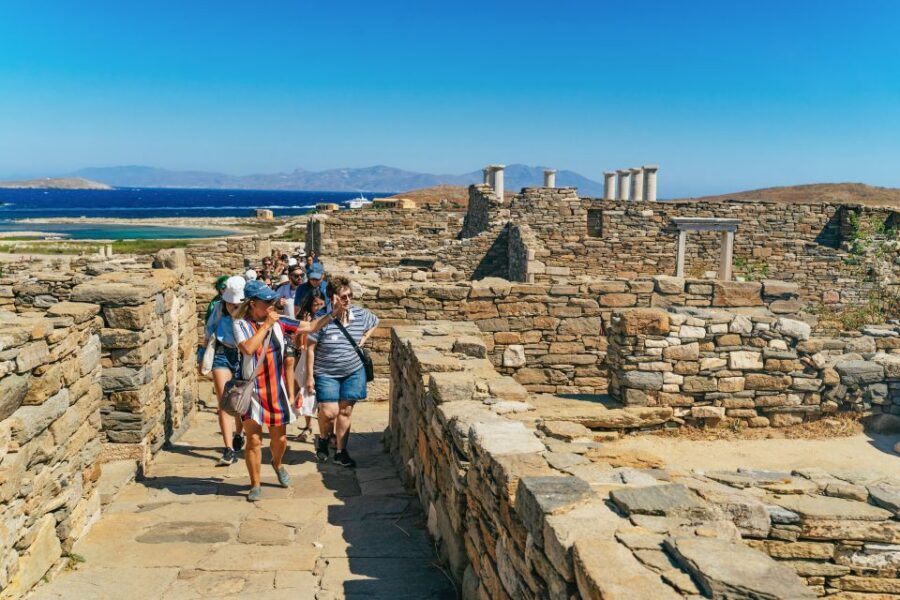
Meet at Deliana port in Mykonos Town and check in at the Delos Tours ticket office. This sounds basic, but it matters because you’re on a clock. You want to find the office quickly, exchange/confirm whatever you need, and get to boarding without stress.
One helpful detail: the tour includes the entrance fees to the archaeological site and museum (20 euros per person). So once you’ve checked in and have your ticket sorted, you’re mainly just timing your arrival and your walking.
Also pay attention to what you bring. Comfortable shoes are a must, and sun protection is not optional. Delos has very little shelter, so you’ll feel every delay.
Delos First Steps: Getting Your Bearings With a Guide

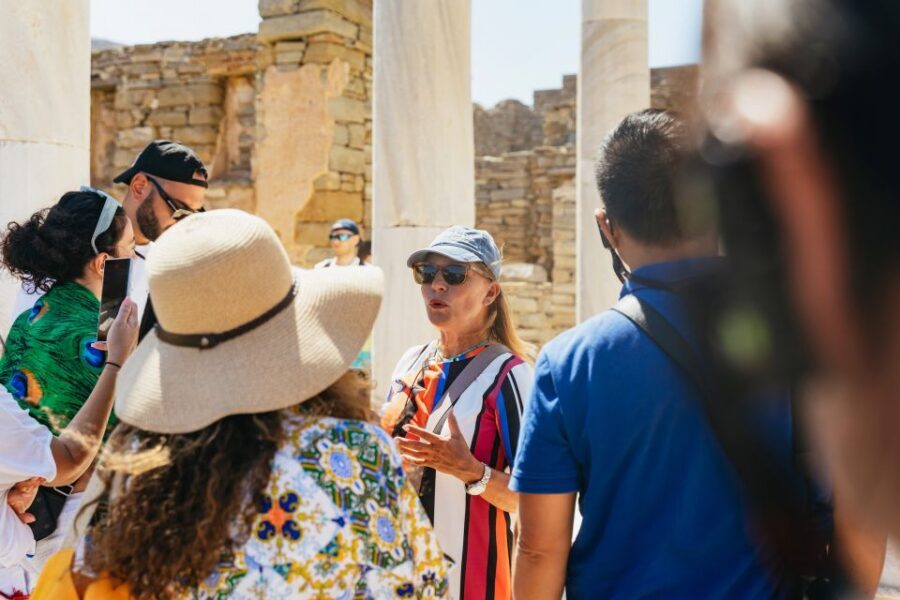
When you arrive, your tour begins with an introduction to the ancient and sacred site, then you head into narrow streets and key zones. This is where a guide changes everything. Without context, it’s easy to wander past important remains and only notice the “pretty” parts.
Guides also seem to vary by group, but the consistent pattern in feedback is this: when the guide is an actual specialist (or close to one), you get sharper details and better stories. Names that kept coming up include Celia and Ilona/Ilena, plus Amaryllis and Joanna. Even when you’re not catching every term, you’ll still feel the difference when someone can explain why the layout mattered.
You’ll also get the wireless tour guide system, which is meant to keep you connected even as you move away from the guide. Treat it like it’s your seat belt: handle it gently, keep it secure, and don’t yank it around.
The House of Dionysus: Mosaics, Wall Paintings, and Real Texture
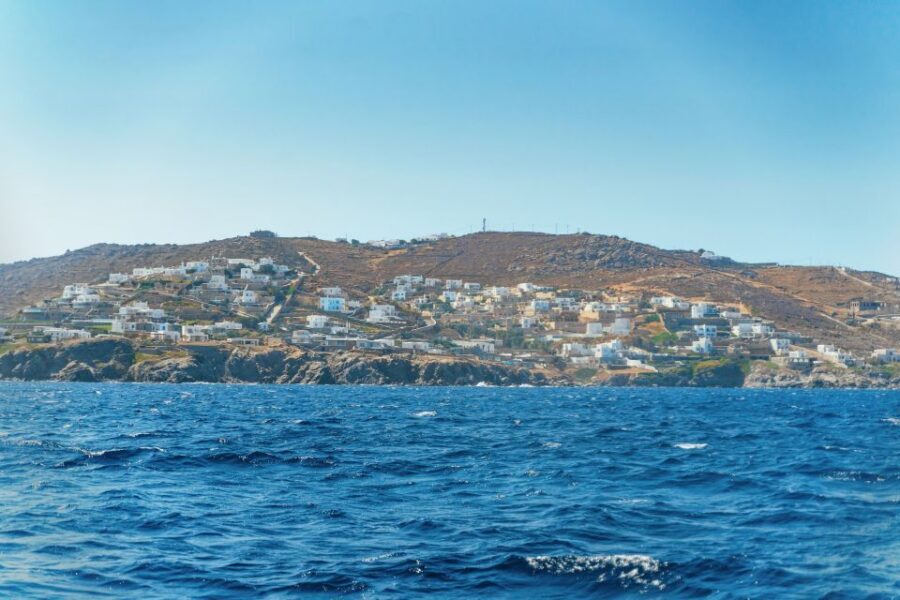
One of the most praised stops is the House of Dionysus. This isn’t just “look at ruins.” It’s where you can see how people decorated their lives and how styles and symbols traveled through time.
What makes this house a highlight is the mix:
- Mosaics that show actual artistry, not just rough fragments
- Wall paintings that help you understand interior decoration
- Marble columns and architectural pieces that read as deliberate design
When someone explains what you’re seeing, it stops being a photo moment. You start noticing placement and composition: what the ancient owners likely wanted visitors (or residents) to feel.
There’s also a big practical benefit to starting strong here. You build momentum early. If you’re tired later, at least you’ve already seen the “top shelf” visual material.
Other Mykonos Town walking tours we've reviewed in Mykonos





Walking Delos’s Main Street Toward the Market Ruins
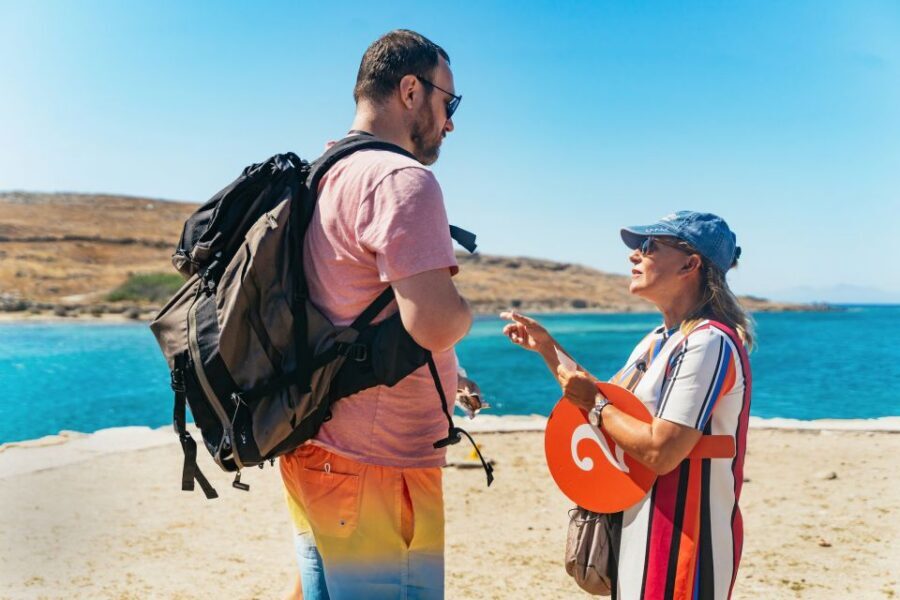
After the more dramatic sacred and residential zones, you’ll move along the route that feels most like “city life.” You’ll walk along the main street toward the market ruins and into the broader sanctuary zone.
This is the part I like most for understanding Delos as a functioning place. The ruins of the market don’t just say “commerce existed.” They show how people moved, traded, and interacted. It’s where you get the sense of Delos as a hub rather than an empty archaeological park.
Expect some time on foot. The site isn’t designed for “slow strolling,” and the sun can intensify quickly. Several people mention there’s basically no shade on Delos, so plan breaks as brief and smart: cool water sips, hat adjustment, and regrouping when your guide pauses.
Temple of Apollo and the Sacred Zone: Where Myth Meets Layout
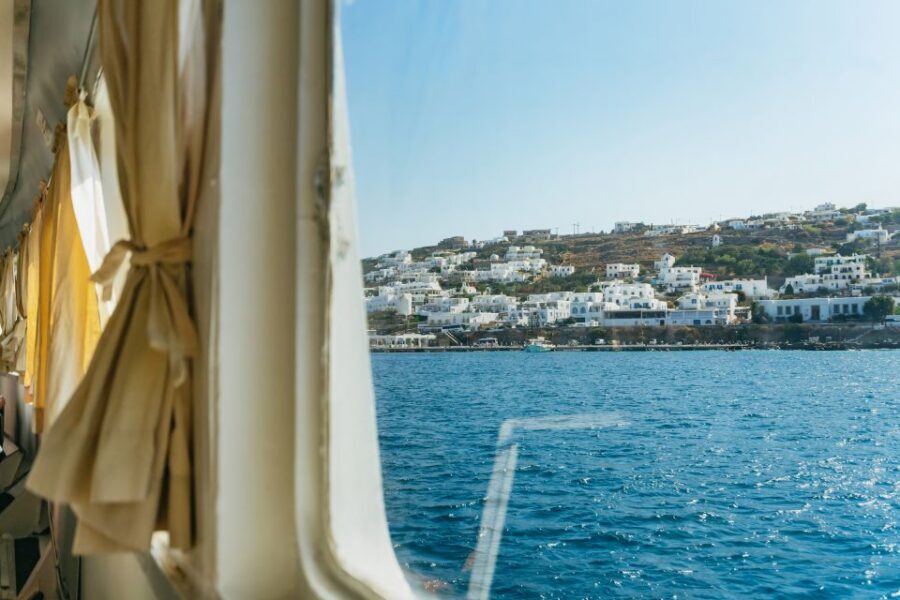
Then comes the Temple of Apollo area and the broader sanctuary zone, including key named structures such as:
- Stoa of Phillipe
- Propylaia
- Colossus of the Naxians
- Theater of Delos
This zone is where the guide’s storytelling pays off again. Architecture and mythology are tied together here. You’re looking at spaces that were used for worship, ceremonies, and public life—not just monuments for later tourists.
What’s useful for you: the guide can help you see how different structures relate. The Stoa, the entry areas, and the sanctuary layout help explain why Apollo’s worship mattered to Delos’s identity. Without that, you might take photos of impressive stones but miss why the placement is meaningful.
Museum Time and the Four-Hour Reality Check

Your guided portion is about 1.5 hours at the archaeological site, with ferry time around it to create a total tour duration of 4 hours. That structure is a compromise: enough time for the essentials, but not enough to read every stone like a textbook.
A common pattern is that after the guided walk, you may have extra time to explore more on your own, including the museum if your schedule fits. Some people manage to spend time in the museum; others feel there’s not enough time to do everything.
Here’s how I’d handle it if I were optimizing your experience:
- If you’re hungry for context, prioritize the museum after the tour guide portion.
- If your main goal is photos and extra walking, you might skip slower museum sections and use that time for more outdoor exploring.
- If your headphones/audio don’t work well in your section, don’t panic. Most guides keep explaining at each stop so the group doesn’t feel lost.
One more thing: toilets on Delos are limited. Plan to use facilities early when you can, and don’t treat them like you’ll find them easily throughout.
Price and Value: What $93 Buys You (And What It Doesn’t)
At about $93 per person for a 4-hour guided day trip, you’re paying for two big things: transportation and expert interpretation. You also include site access—entrance fees to the archaeological site and museum cost 20 euros per person—which matters because that’s an extra line-item on many other tours.
What’s not included is simple:
- Food and drinks are not provided.
So the “true cost” isn’t just the ticket price. Budget for water (and maybe a snack) because Delos is sun-heavy and you’ll want to stay comfortable. If you get dehydrated, you’ll enjoy fewer stops, which is the opposite of value.
Also, the guide system isn’t just a gimmick. When it works well, it keeps you synced with the group and helps you hear stories at each monument instead of just learning them after the fact from a phone.
Group Size and Comfort: The Crowds Part of the Deal
This tour can run as a larger group rather than a tiny private circle. Some people describe groups of 30+ when cruise ships are in port, and you may share the site with other tours. The good news is your guide will try to keep you moving and hitting the key moments.
Still, you should go in with your eyes open:
- Expect busier conditions at the most popular stops.
- Audio can be sensitive if you wander too far from the guide.
- In crowded pockets, the pace may feel like it’s being set by logistics instead of your personal photo checklist.
The upside? You still get the structure. Delos is big, and the difference between “I saw ruins” and “I understood Delos” often comes down to having a guide steer you through the main points.
What to Bring to Actually Enjoy Delos
Do not show up underprepared. Delos punishes mistakes with sun and heat. Bring:
- Passport or ID card
- Comfortable shoes
- Sunglasses
- Sun hat
- Sunscreen
- A face mask or protective covering (as recommended)
Also be mindful of baggage rules. Oversize luggage isn’t allowed, so travel light and keep your day-pack manageable.
And handle the wireless audio gear carefully. If it’s lost or damaged, there’s a 150 EUR penalty. You don’t need to be nervous—just keep track of the device like it’s part of your ticket.
Who This Tour Suits Best
This is a strong choice if:
- You want the big highlights—House of Dionysus, Apollo sanctuary, Market Street ruins—without wasting time guessing what matters
- You prefer guided structure over self-guided wandering
- You enjoy history and mythology but also like practical explanations that make the place readable
It’s less ideal if:
- You hate crowds and want slow, private pacing
- You need reliable shade breaks (Delos is sun-forward)
- You use mobility aids. This tour is not suitable for wheelchair users
Should You Book the Mykonos Town: Delos Guided Day Trip?
I’d book it if Delos is a “once in a lifetime” stop for you. The tour’s value comes from guide-led interpretation plus included site access, and the visual highlights—mosaics, painted surfaces, and the sanctuary layout—are the kind you’ll remember long after you leave.
If you can handle a busy morning and you come prepared for sun and limited amenities, this is one of the cleanest ways to see Delos without turning it into a confused scavenger hunt. Just plan your comfort like it matters, and you’ll get the best version of the day.
FAQ
How long is the Delos guided day trip from Mykonos Town?
The total duration is 4 hours.
Where do I check in for the tour in Mykonos?
Go to Deliana port in Mykonos Town and check in at the Delos Tours ticket office.
Is hotel pickup included?
Hotel pickup is optional. If you choose the transfer option, it includes 1 way hotel pickup. If you don’t, the tour departs from the old port of Mykonos.
What’s included in the ticket price?
Included are the roundtrip boat ticket, entrance fees to the archaeological site and museum of Delos (20 euros per person), a tour guide, taxes, safety equipment, and a wireless tour guide system. Food and drinks are not included.
Are there entrance fees for Delos?
Yes. Entrance fees to the archaeological site and museum of Delos are included and listed as 20 euros per person.
Is this tour suitable for wheelchair users?
No. The tour is not suitable for wheelchair users.