REVIEW · MYKONOS
From Mykonos: Delos Archaeological Site Guided Evening Tour
Book on GetYourGuide →Operated by Delos Travel · Bookable on GetYourGuide
Delos feels like a time machine after sunset. I love how this evening tour pairs a real guide with standout ruins like the House of Dionysus, plus time at the on-island archaeological museum so you can connect what you see in the streets to what’s behind the artifacts.
I also like the timing: you’re walking Delos when the light turns softer and the heat eases, with golden-hour views on the way back and typically fewer people on-site than the daytime tours.
One heads-up: the Mykonos-to-Delos boat ride can be very windy and rough, and you’ll be on foot on uneven ground once you arrive, so plan for rough seas if you’re prone to motion sickness.
In This Review
- Key highlights worth planning around
- Mykonos to Delos in one smooth evening block
- Getting oriented fast: stepping onto Delos’ sacred grid
- House of Dionysus: the reason people remember Delos
- Theater of Delos and the urban monuments in context
- Main street to market and the sanctuary zone: the big names
- Museum time: connecting what you saw outdoors to real finds
- The ferry ride reality check: what wind does to plans
- What you’ll actually spend (and what’s included)
- Logistics you should not ignore: meeting point, pickup, and what to pack
- Who should book this Delos evening tour
- Should you book the Mykonos to Delos evening guided tour?
Key highlights worth planning around
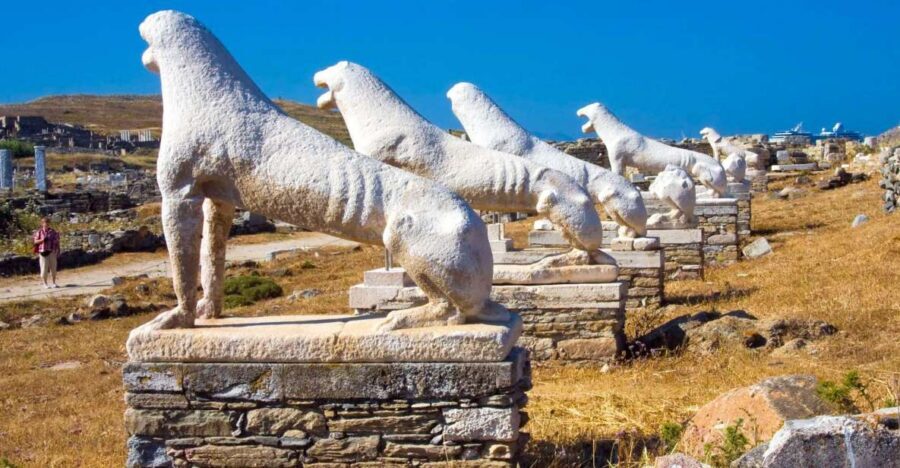
- House of Dionysus: marble columns, mosaics, and wall paintings in one of Delos’ most dramatic settings
- Evening timing: cooler walking conditions and softer light for photos
- Guided context fast: you’ll get orientation in Delos’ sacred layout instead of wandering randomly
- Museum add-on: entrance is included, so you can connect “ruins outside” to “finds inside”
- Wireless guide system: helpful when wind makes normal listening tough
- Boat comfort (with caveats): round-trip transfer is included, but conditions can still turn choppy
Mykonos to Delos in one smooth evening block
This tour is built around a simple rhythm: you leave Mykonos by boat, spend focused time on Delos with a guide, then return before your day fully dissolves into travel fatigue. The total duration is about 3.5 hours, with a 30-minute ferry hop in each direction and roughly 1.5 hours guided on the site.
Even better, the evening slot changes the feel of Delos. Daytime can be punishing, because the island has very little shade. Going later helps you walk longer without feeling like you’re sprinting from one stone to the next. You’ll also get that atmospheric “sun setting on ancient ruins” payoff—especially from the boat ride back.
If you’re comparing options on Mykonos, this tour also has one practical advantage: it uses the tour’s dedicated boat schedule between Mykonos and Delos, rather than forcing you to stitch together your own timing.
Other Delos and Rhenia cruises we've reviewed in Mykonos

Getting oriented fast: stepping onto Delos’ sacred grid
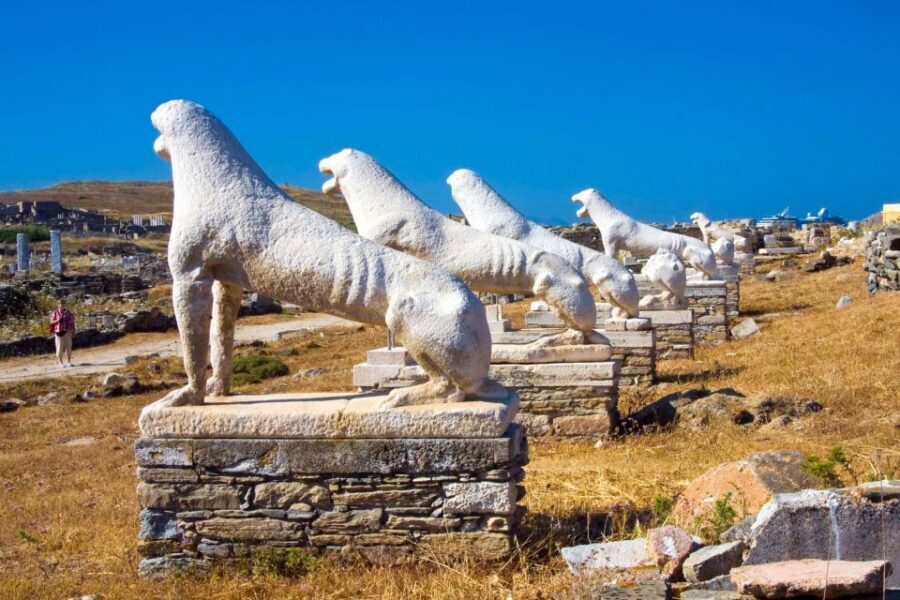
Once you arrive, the guide starts you with what to look for and where you are in Delos’ story. Delos wasn’t just a pretty set of columns—it was a functioning island city and a major sacred site. You’ll get an introduction to the ancient world before you’re released into the streets.
From there, it’s a walking experience. You’ll move through narrow city streets and along main routes that connect different zones—urban areas, market points, and the sanctuary zone. The ground is uneven in places, so comfortable shoes matter more than you’d expect from a “ruins tour.” Bring sunglasses and sun protection too; even in the evening, the sun still has a vote.
The tour also uses a wireless guide system, which is included to improve what you hear while you’re outside. That matters because wind on the island can make it harder to catch every word in a normal speaking volume. (Some people do note microphone sound issues, but the wireless system is still there to help.)
You’ll also be given safety equipment for the boat side of things, and you’ll spend enough time together with the group that you don’t have to second-guess where the next stop is.
House of Dionysus: the reason people remember Delos
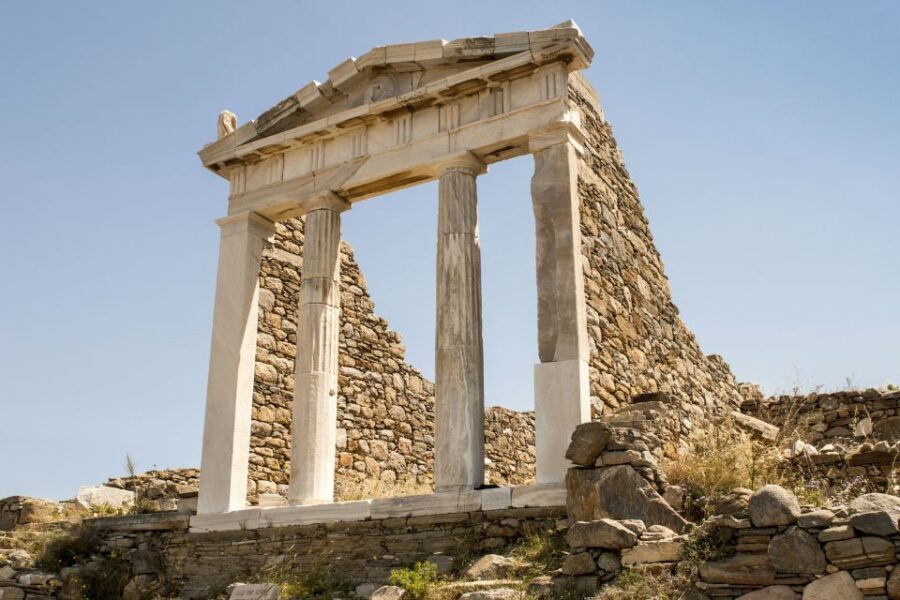
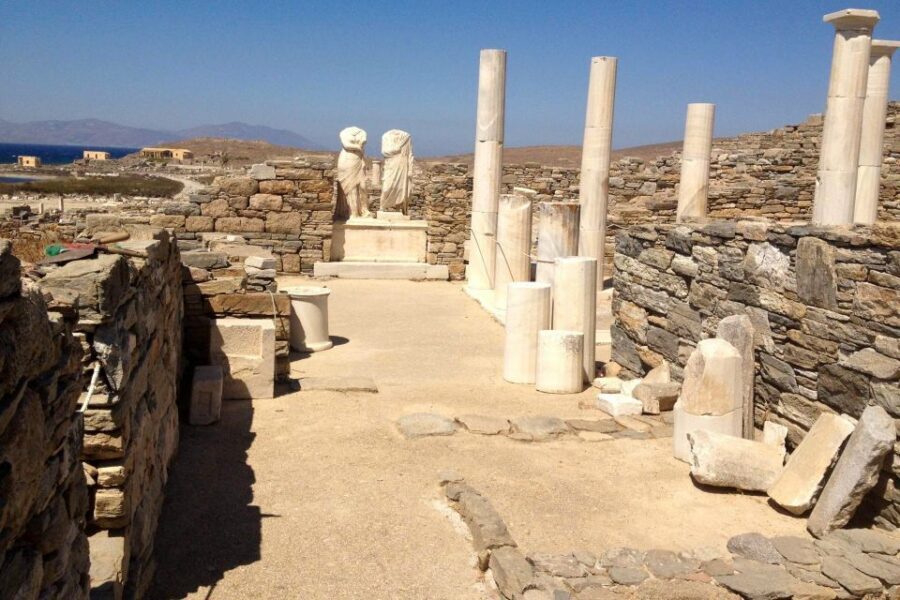
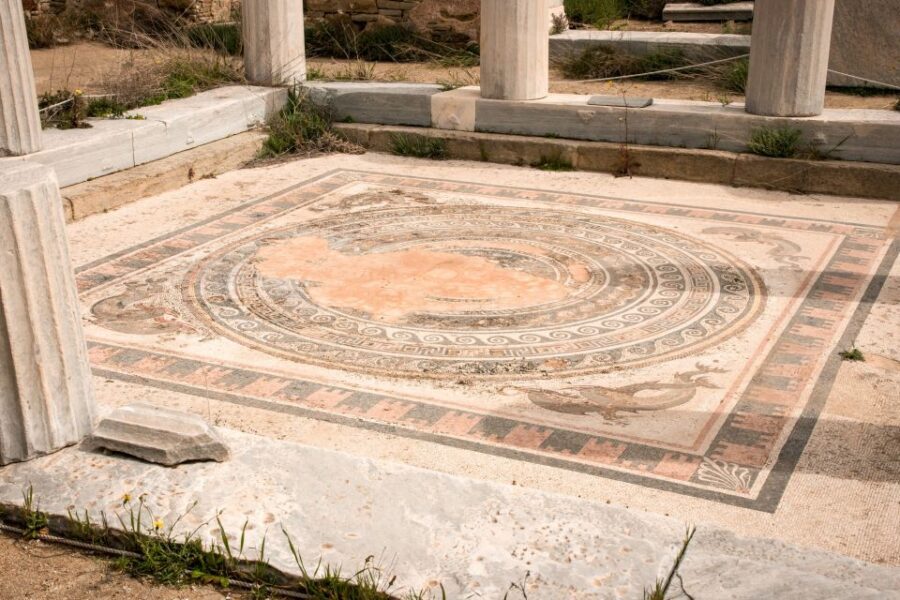
If I had to pick one moment that makes Delos feel real, it’s the House of Dionysus. This is the sort of place where the ruins aren’t just “remains”—they’re visually specific. Expect marble-columned architecture and the kind of decorative wall imagery that makes you understand how wealthy and organized the space once was.
What really brings this area to life is the combination of visual categories:
- Mosaics that survive well enough to register as deliberate design, not just broken tiles
- Wall paintings that help you picture interior decoration and movement
- Columns that give you a sense of scale, even after the building lost much of its original structure
A guide makes a big difference here. Without context, you might see a beautiful arrangement of stones. With the right framing, you start noticing how this space fits into daily life—how a wealthy home would look, how visitors would flow through rooms, and why certain decorative themes mattered.
If you care about architecture, art, and “how people lived,” this stop is the highlight you’ll want to be paying attention for, not just photographing.
Theater of Delos and the urban monuments in context
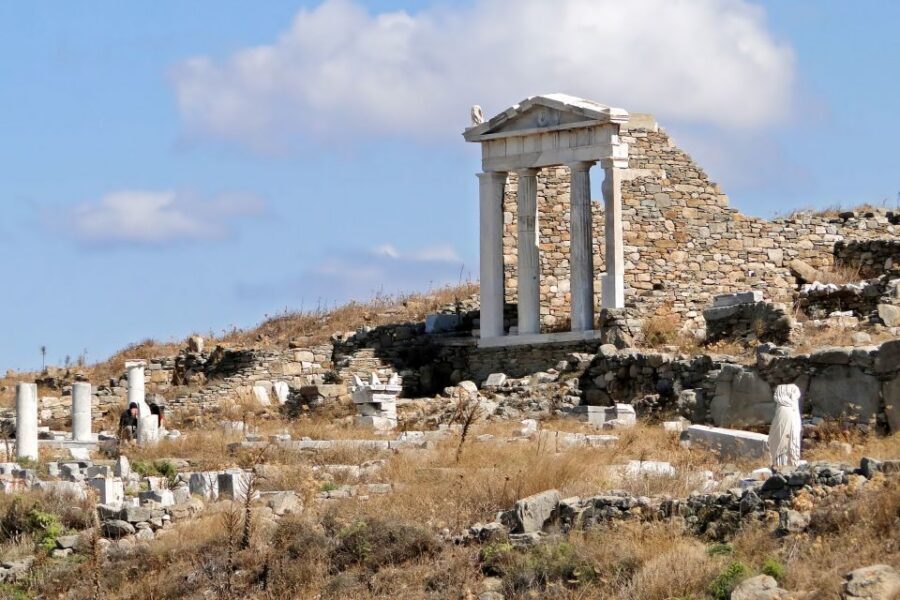
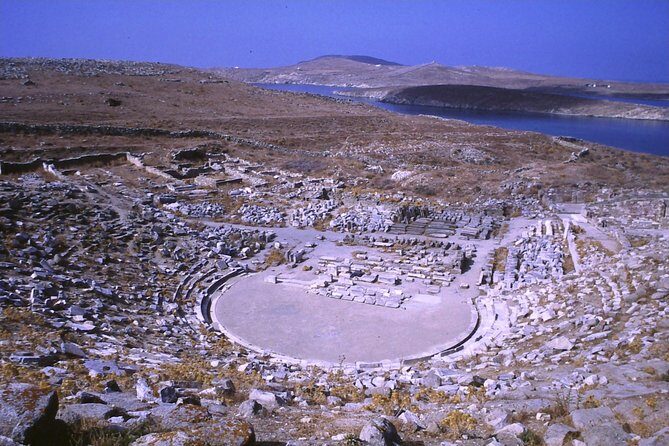
After Dionysus’ house, the tour continues through the urban area, including the Theater of Delos. The theater is one of those structures that can be hard to fully “read” from a glance—so it helps to have someone explain what you’re looking at, why it’s placed where it is, and what the space likely signaled in the community.
As you walk, you’ll also see other monuments that act like landmarks for the city. The value isn’t only that you visit more sites—it’s that you visit them in an order that tells a story. The guide’s job is to stitch it together so you don’t feel like you’re just moving between random piles of rock.
This is especially helpful if Delos is new to you or if you’re doing it after other big-ticket Greek sites. The best guides help you compare what you’ve learned elsewhere—how different places handled religion, entertainment, trade, and public life—and you’ll feel that connection as the streets open up into larger zones.
Main street to market and the sanctuary zone: the big names
One of the most satisfying parts of Delos is how it layers city life over sacred space. As you walk along the main street toward the market and sanctuary areas, the guide helps you catch the difference between everyday activity and the ceremonial “why” of the site.
Here are some of the specific named stops you’ll encounter:
- Stoa of Phillipe: a long structure type that signals public gathering and commerce
- Propylaia: gateway architecture—how you enter matters in sacred zones
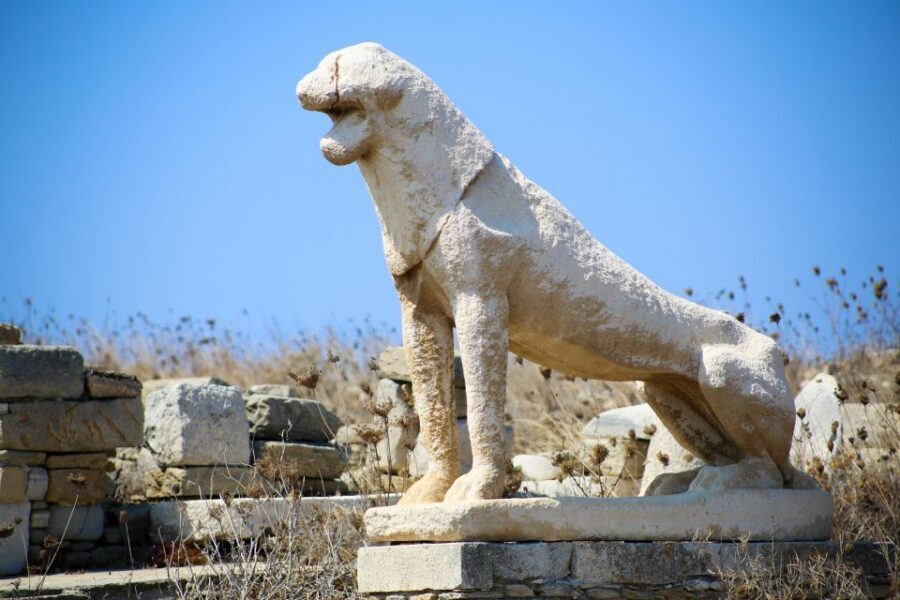
- Colossus of the Naxians: a standout monument tied to patronage and identity
- Temple of Apollo: the anchor point of the sanctuary zone
These names can feel like homework if you go alone. With a guide, you start to understand why they show up where they do. You’ll also get a better sense of scale, which is crucial at Delos because so much is “outline and foundation.” Architecture becomes readable when someone tells you what the lines and spaces were meant to do.
Photo-wise, the sanctuary zone and street routes are great in the evening. The angle of the light makes the marble and pale stone look less flat, and it also helps you separate layers—foreground foundations versus distant building lines.
Other guided tours in Mykonos
Museum time: connecting what you saw outdoors to real finds
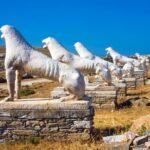
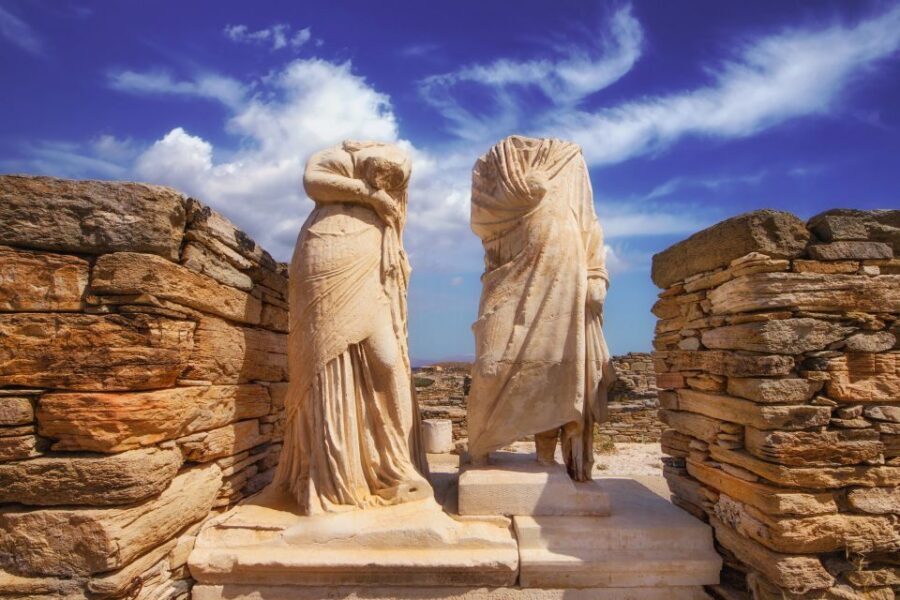
This experience includes time at the archaeological museum on Delos. That’s a smart add-on, because a guided walk is naturally visual and space-based. The museum gives you a chance to anchor that space to objects: sculptures, fragments, and pieces that help you understand the scale and craftsmanship of what once filled these buildings.
You don’t need to be an archaeology superfan for this to help. Even if you only care about the highlights, museum time adds clarity. For example, seeing a ruin and then seeing related art or carved stone can make the difference between “pretty columns” and “someone designed this for a reason.”
One practical note: the tour includes entrances, but a specific “skip-the-line” advantage applies to the archaeological site entrance. So don’t assume every museum door gets the same treatment—just plan to move as directed once you’re on Delos.
The ferry ride reality check: what wind does to plans
Let’s talk boats, because this is where your comfort can swing the most.
The ferry ride is short—about 30 minutes each way—but some days are dramatically more uncomfortable than others. People have reported super windy conditions and rough waters that make the boat feel like it’s pitching. If you’re even slightly prone to motion sickness, take it seriously.
Here’s what’s practical:
- Choose seating wisely when you board. Reports suggest that sitting upstairs can help when conditions are rough.
- Consider bringing motion-sickness medication ahead of time if you know you react to chop.
- Wear good footwear. It’s not a long trip, but shifting on a moving boat is easier when your shoes grip.
Also keep expectations realistic: the boat isn’t described as a fancy experience. And on rough days, the limited space and wind exposure can be uncomfortable even if you’re “fine” on normal boats. If the sea is choppy, the goal is just to get you to Delos safely, and the crew focus is on that.
The silver lining: when conditions cooperate, the return ride can deliver an especially memorable sunset view—one reason so many people call the evening tour a must.
What you’ll actually spend (and what’s included)
At about $93 per person, this tour is not the cheapest way to see Delos—but it’s also not just “pay for a ticket.” Your money buys:
- Round-trip boat transportation between Mykonos and Delos
- Entrance fees to the archaeological site and museum (noted as 20 euros per person)
- A live guide, plus a wireless system for clearer listening
- Safety equipment
- Optional one-way transfer (if your selected option includes it)
Food isn’t included. That’s the main cost you’ll need to plan for. Delos is explored on foot and you’re outdoors for the whole experience, so you’ll want water and some snacks if you’re sensitive to heat or fatigue. You can buy cold bottled water and refreshing drinks/snacks on Delos vessels, so plan to get what you need once you’re there rather than assuming a café stop.
Value-wise, the best part is the guide time. Delos is large and visually complex, and a guide helps you focus on the highlights without you spending your energy on figuring out the route.
Logistics you should not ignore: meeting point, pickup, and what to pack
Meeting points can vary depending on the option you book, and pickup is optional. If you choose pickup, plan for it to happen roughly 45 minutes to 1 hour before departure, based on your hotel location. You’ll get details by email.
As for packing, keep it simple and practical:
- Bring an ID/passport
- Wear comfortable shoes
- Pack sunglasses, sun hat, sunscreen
- Bring a face mask or protective covering
- Leave pets and oversized luggage at home
- Avoid carrying large bags, since oversize luggage isn’t allowed
Delos is an outdoor site. There’s not much for “waiting in comfort” if the sun is intense—so dress for exposure and be ready to move.
Who should book this Delos evening tour
This is a strong choice if you want Delos to feel guided, not vague. If you’re the type who enjoys learning why things are placed where they are—how sanctuaries work, how daily life might have looked, and how mosaics and architecture connect—this tour is built for you.
It also fits:
- Couples who want a romantic evening payoff without complicated planning
- Solo travelers who don’t want to fight the route on their own
- Families who can handle a walking-focused program (though younger children may struggle with the combination of uneven ground and limited shade)
If you hate boats or know you get seasick easily, you can still go—but take precautions. And if you’re looking for a full-day deep wander where you can explore far beyond the highlights, this evening timing will feel short. You’ll see the “must-see” core and come away happy, but you won’t cover every corner of the island.
Should you book the Mykonos to Delos evening guided tour?
Yes—if you want the best balance of guided interpretation + evening conditions without spending hours managing tickets and timing. This is one of those experiences where the guide noticeably raises your understanding, and the evening slot makes the whole site more pleasant to walk.
I’d book it especially if:
- you care about the House of Dionysus mosaics and wall paintings
- you want the sanctuary highlights like Temple of Apollo without getting lost
- you’d rather see Delos in softer light than grind through midday heat
Skip it or adjust expectations if:
- you’re very sensitive to boat movement and haven’t planned for it
- you’re hoping for a long, self-paced full-island exploration
If you’re on Mykonos and only have a short window, this evening tour is a high-value way to do Delos properly—without wasting your time staring at stone without a map for meaning.